

Contents
- Things to Do in Japan: Real Stories Beyond the Guidebook Highlights
- Tokyo: A Giant Lantern, Free Skyscraper Views, and a Ramen Shop That Changed Our Night
- Kyoto at Night
- Onsen Almost Every Night
- Sleeping in Ryokans on the Road
- New Year’s Eve, an Izakaya, and a Street Full of Inflatable Dinosaurs
- Koyasan and the Temple Stay I Didn’t Take (Yet)
- The Backroads of Shikoku and Chugoku
- Eat Everything, Especially the Karaage
- Don’t Skip the Convenience Store
- The Arcades Are Everywhere
- Don’t Skip Nara
- Popular Stuff I Still Haven’t Done (Yet)
Things to Do in Japan: Real Stories Beyond the Guidebook Highlights
Most “things to do in Japan” lists are built around the same dozen photos: Shibuya Crossing, Fushimi Inari, Mount Fuji from a train window. I’ve been to some of those too, but the truth is that most of the “things to do” in Japan are really just experiences, and they can happen in almost any neighborhood. Grab some good food and a drink, wander into a karaoke bar, an arcade, or whatever niche gathering is happening that night, make friends with the locals, and hop around until it’s time to go home. That’s life in Tokyo, at least. Off the beaten path the idea is the same, you’re just less likely to find an English speaker, and more likely to find someone who buys you a drink and pushes food on you anyway, language barrier be damned.
If you’re looking for Osaka specifically, I only flew in and out and spent my big-city time in Tokyo instead, so that one’s better covered elsewhere.
Here’s what’s ahead: Tokyo’s giant lantern and a free skyscraper view, Kyoto at night, onsen-hopping, sleeping in ryokans, a New Year’s Eve that turned into a street party, Koyasan, the Shikoku backroads, the food (and convenience stores) you shouldn’t skip, the arcades, Nara, and a few famous things I still haven’t gotten around to.
Tokyo: A Giant Lantern, Free Skyscraper Views, and a Ramen Shop That Changed Our Night
My first trip to Japan in 2014 was a 48-hour stopover in Tokyo with my travel buddies Susan and Steph, and I’ve already written about that bullet train ride in. We stayed in Asakusa, right near Sensoji Temple and its market, which is home to what might be the world’s largest lantern hanging over the street. It was near there, at a streetside ramen shop, that a couple at the bar started laughing, a white guy with two white girls, none of us spoke a word of Japanese, but they wanted to hang out anyway. We followed them into the night popping our heads into a string of izakayas before finally picking one to actually sit down and order at.

We also made it up to the observation deck at the Tokyo Metropolitan Government Building in Shinjuku, the actual city government office, which has one of the only free skyscraper views in Tokyo. No ticket, no line worth mentioning, just an elevator ride and a 45th-floor view across the whole city.

Kyoto at Night
Kyoto gets its own dedicated guide since there’s a lot more to say about it, but a few stops are worth mentioning here. I made it to Kinkaku-ji, the golden temple perched at the edge of the water, and up the hill through the endless orange torii gates at Fushimi Inari. But what I actually remember most is wandering the streets of Kyoto at night with my camera, just taking in the architecture, the way the whole street seemed to balance itself out with lanterns and everything else in its place. One night I treated myself to a plate of fatty tuna sushi, easily the most I paid per bite of anything I ate the entire trip, and it was worth every yen.
Kyoto’s food market turned out to be one of the best stops of the whole trip, and not just for the tako tamago (baby octopus stuffed with a quail egg and skewered, more on that in my Japanese Food Guide). I grabbed karaage there too, and it ended up being one of my favorite places on the whole trip to shop for souvenirs to bring home.
Onsen Almost Every Night
On the Shikoku and Chugoku road trip we hit an onsen almost every night. Why wouldn’t you? They’re cheaper than you’d expect and it’s a real way to slow down and experience something authentically Japanese instead of just looking at it. I’m more of a hot shower guy by nature, but working between the hot and cold pools, lingering longer in the hot ones each time, is a great way to loosen up before a long hike and an even better way to recover after one.
Some onsen are tiny shacks with a couple of tubs, others are open air with stone walkways. Look for one by a river or fed by a mineral spring if you can. Some let you order food right there, some have private rooms, and some are packed shoulder to shoulder. All of it’s worth trying at least once.
Sleeping in Ryokans on the Road
Traditional ryokans ended up being our go-to place to stay for most of the road trip. Rural Japan doesn’t always have the kind of hotel options you’d expect, and a ryokan is often just what’s actually available once you’re off the main tourist routes. If you or someone in your group speaks Japanese, you can usually find one to book even in small towns. Between the futon-on-tatami sleeping setup, the shared or private onsen many of them have attached, and a home-cooked feeling you don’t get from a hotel, it became one of our favorite parts of the trip almost by necessity.
New Year’s Eve, an Izakaya, and a Street Full of Inflatable Dinosaurs
We spent New Year’s in Tokushima, and it turned into one of the best nights of the whole trip almost by accident. My friend Andrew struck up a conversation with the bartender and another couple at a small izakaya where we’d stopped for dinner and drinks. After we finished eating, they poured us all a shot and invited us to come with them.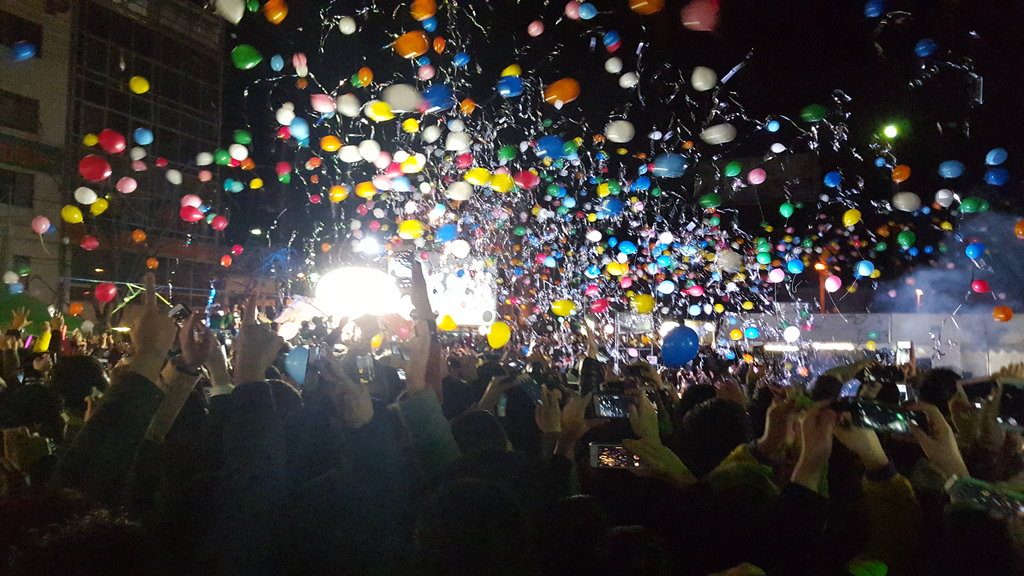
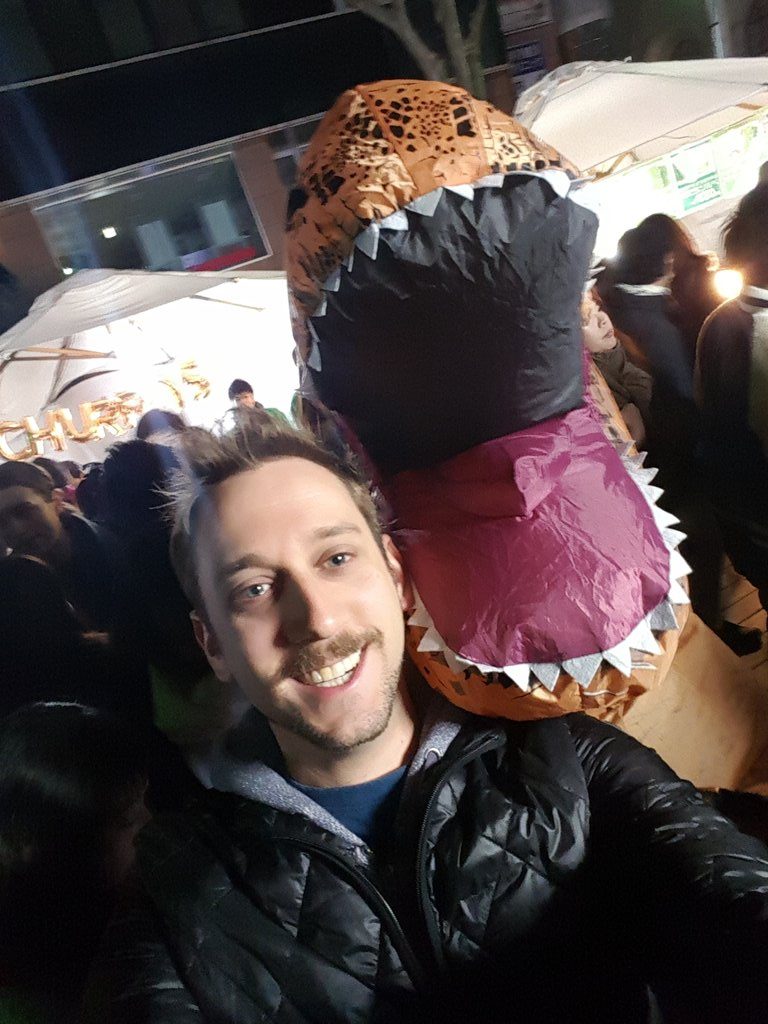
They led us to what looked like an amphitheater; it was probably just a normal square but people packed in all around, an incredible DJ, and a few people bouncing around in inflatable dinosaur costumes. I still don’t know exactly what we stumbled into, but it’s one of those only-in-Japan moments you can’t plan for.
Koyasan and the Temple Stay I Didn’t Take (Yet)
We went from Tokushima to Koyasan, where Shingon Buddhism was founded. My friend Andrew found us a mountain hotel nearby, and it wasn’t until later that I realized you could actually stay overnight inside one of the temples themselves. That single realization sent me down a rabbit hole researching temple stays for a future Japan trip that I never quite got back to book. I did eventually get my temple stay, just not in Japan, I spent a week at Kopan Monastery in Nepal a few years later. That’s a story for a different guide, but Koyasan is where the idea first took root.
The Backroads of Shikoku and Chugoku
Some of my favorite memories from Japan aren’t a single stop, they’re the drive between stops. Cruising from Shimanto toward Kochi and Okayama, I was struck by how developed the farmland was compared to what I know from the US. Vast farms, sure, but packed between them were small houses and shacks and other bits of infrastructure that somehow never looked out of place. It felt like a real step back from the pace of Tokyo, in the best way.
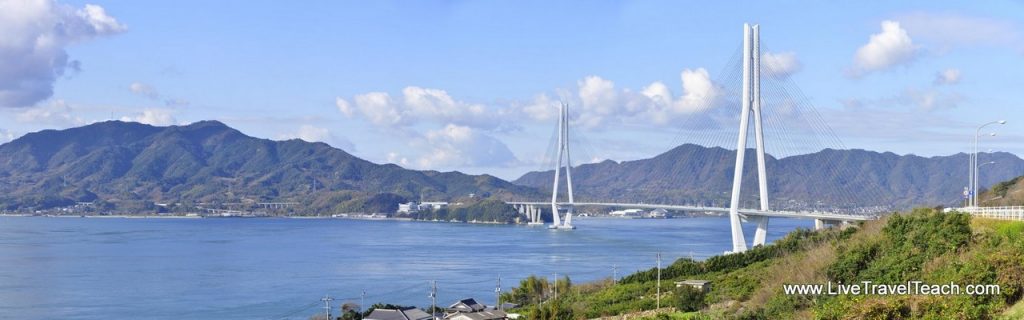
We also drove across the Shimanami Kaido, the bridge system linking Onomichi to Imabari, on our way through the region. My memory of the crossing itself has faded, but I still remember it as one of those “wait, we’re driving across the ocean” moments.
The full road trip through Matsuyama, Matsue, and Izumo and Hinomisaki is worth its own read if you want the full route.
Eat Everything, Especially the Karaage
I already wrote a whole Japanese Food Guide so I won’t repeat all of that here, but if I was planning my next trip to Japan today, sushi and karaage are what I’d be most excited to eat, not necessarily together. Ramen and the other noodle dishes are a close second.
One thing that never made it into the food guide, yakiniku. Japanese BBQ is genuinely delicious, but it’s pricier than what I was used to getting regularly living in Korea, so I didn’t order it as often as I probably should have. If you’re visiting from somewhere without easy access to Korean or Japanese BBQ, don’t make my mistake, order it.
Don’t Skip the Convenience Store
This one sounds ridiculous until you’ve actually done it. Japanese convenience stores, 7-Eleven especially, are on a completely different level from what that name means back home. You can grab a beer, a full sushi set, and a Kit Kat all in the same stop, and none of it feels like a compromise. Japan’s been doing wild, limited-edition Kit Kat flavors, matcha, sake, wasabi, purple sweet potato, and plenty more depending on the season and region, since long before every other candy brand decided novelty flavors were a marketing strategy. Hunting down a flavor you haven’t tried yet is a legitimate souvenir-shopping activity on its own.
And don’t scoff at 7-Eleven sushi. I’d put it up against a lot of sit-down sushi restaurants back home without hesitation. If you’re not stopping into a combini at least once a day in Japan, you’re missing one of the actual experiences of being there.
The Arcades Are Everywhere
Little arcades tucked into an izakaya or a supermarket, massive ones built to host thousands of kids a night, and some that feel geared toward adults who’ve had a few drinks and are looking for somewhere to unwind before heading home. They’re at every size, in every neighborhood, at basically any hour. I thoroughly enjoyed just wandering into whichever one I happened to pass.
Don’t Skip Nara
If temples, a giant Buddha, and hundreds of deer that’ll bow for a cracker sound good to you, Nara is an easy day trip from Kyoto, Osaka, or even Tokyo if you’ve got a long day to spare.
Popular Stuff I Still Haven’t Done (Yet)
Plenty of the things people search for when planning a Japan trip aren’t things I’ve actually done myself, and I’d rather tell you that straight than pretend otherwise. I haven’t made it to the Fuji Five Lakes yet, but it’s at the top of my list for a return trip, ideally during cherry blossom season, with Fuji reflected over a lake like Kawaguchiko and nothing on the agenda but wandering around for a few days. I want to see the snow monkeys at Jigokudani too, though I’ll be watching from a respectful distance and taking pictures rather than getting in the water with them, that sounds like a great way to need a bath of my own afterward. A proper sumo tournament and a formal tea ceremony are still on the list as well. TeamLab’s digital art museums didn’t exist yet when I was there, and neither did a lot of the newer attractions in Tokyo and Osaka, so those are on the list for a return trip too. I never made it up Tokyo Skytree itself, the free view from Shinjuku scratched that itch well enough at the time. If any of these are the reason you’re going, they’re worth researching properly rather than taking my word for it since I can’t speak from experience yet.
None of this is the “greatest hits” version of Japan, and that’s kind of the point. If you’re building a trip, steal freely from this list: an onsen night, a ryokan stay in the countryside, a wander through Kyoto after dark, a convenience store run for Kit Kats and 7-Eleven sushi, an arcade for no reason at all. The famous stuff is famous for a reason, but these are the things I’d actually tell a friend to build a day around.


