


If you’re headed to the Philippines, sorting out your eSIM before you land is one of those small decisions that saves you real time and hassle once you’re on the ground. Between the country’s SIM registration requirements, the different islands, and the fact that connectivity can vary a lot between a city like Cebu and a boat day out in El Nido, it’s worth understanding the specifics rather than just grabbing whatever plan has the biggest number on it.

Quick note before you dive in: eSIM pricing and plans change often, sometimes month to month. Every price below is a snapshot at the time of writing, so check the provider’s own site for current rates before you buy.
Contents
- The Short Answer: Best eSIM for the Philippines
- The Philippines SIM Registration Act: What It Actually Requires
- Philippines eSIM Coverage: What to Expect by Destination
- Getting Around: Grab
- How Much Data You Actually Need
- Setting Up Your Philippines eSIM Before You Land
- Best eSIM for the Philippines: Provider Comparison
- Philippines eSIM and SIM Registration Act FAQ
The Short Answer: Best eSIM for the Philippines
Get an eSIM that runs on Globe or Smart, the country’s two major networks, both of which have broad coverage across Manila, Cebu, and Boracay, with reasonable reach into most other islands. If your trip includes more remote stretches, El Nido’s outer lagoons or Cebu’s mountain roads around Kawasan Falls, don’t assume signal will be there the whole time. Everything below is the why and the specifics.
The Philippines SIM Registration Act: What It Actually Requires
The Philippines passed the SIM Registration Act (Republic Act No. 11934) in 2022, and it applies to tourists just as much as residents. If you buy a physical SIM card anywhere in the country, airport kiosk included, you’re legally required to register it before it works, and that means handing over real documentation, not just cash.
For a tourist, that means presenting your passport, proof of address in the Philippines (a hotel booking is generally accepted), and a return ticket showing you’re leaving the country. Once registered, a tourist SIM is only valid for 30 days and automatically deactivates after that, so if you’re staying longer, you’d need to register again partway through your trip.
This is exactly the kind of paperwork an international eSIM sidesteps. Since you’re buying the eSIM from a provider outside the Philippine telecom system, you install it before you fly, and it works the moment you land without ever going through a local registration counter. No passport scan at a kiosk, no 30-day countdown to track, no repeat registration if your trip runs long.
Philippines eSIM Coverage: What to Expect by Destination
Coverage quality varies enough by island that it’s worth breaking down destination by destination rather than treating “Philippines coverage” as one number:

- Boracay: Well covered. White Beach and the station areas all get solid 4G, and 5G is increasingly common in the tourist zones. This lines up with what I’d expect based on how built-up the island’s gotten, see our full Boracay Itinerary and Things to Do in Boracay for what you’ll actually be using that data for.
- South Cebu: Mactan-Cebu and the urban core have strong 4G/5G. Moalboal and the drive out to Kawasan Falls and Oslob should hold a connection on either major carrier, though mountain roads and waterfall areas are exactly the kind of terrain that can create pockets of weaker signal anywhere in the world. Full details in our Cebu Itinerary and Things to Do in South Cebu.

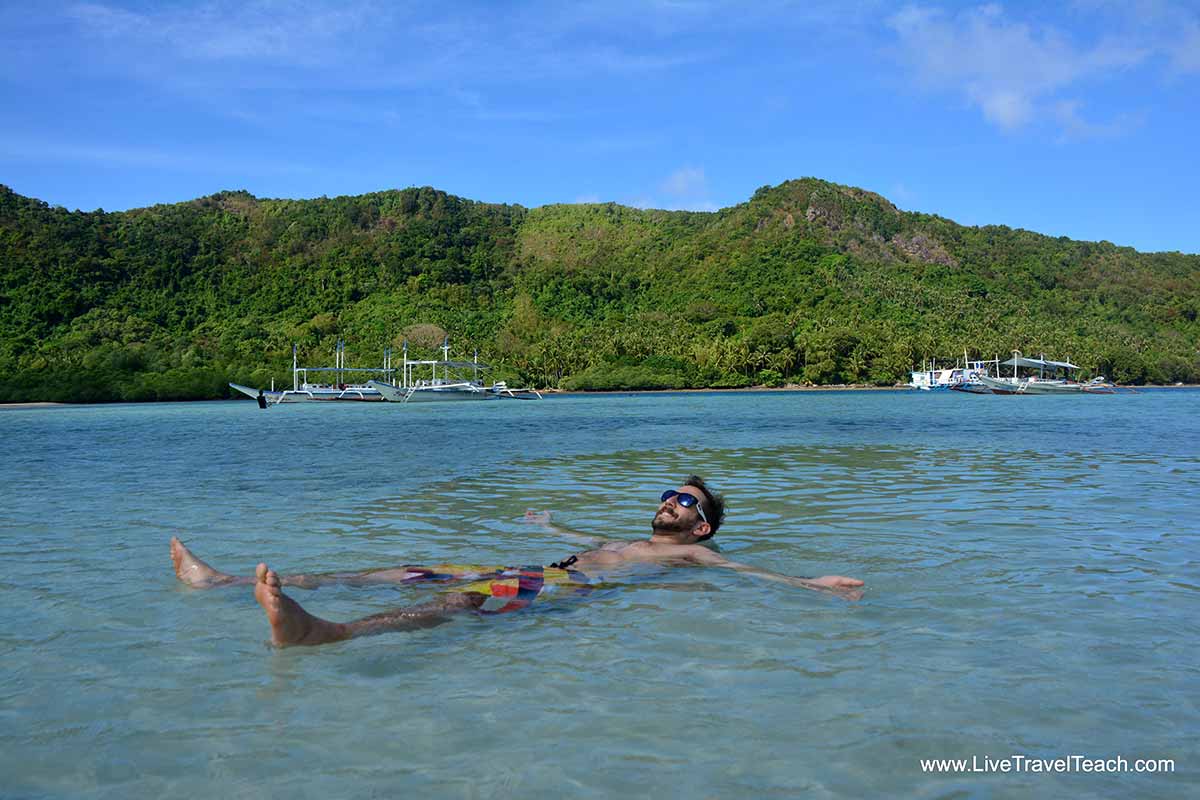
- El Nido: This is the one I’d be most cautious about. El Nido town itself should have workable coverage, but once you’re out on Bacuit Bay for a full day of island hopping, Big Lagoon, Secret Beach, Snake Island, don’t count on a signal the whole time. Download offline maps before you head out on any of the four tour routes. See our El Nido Itinerary and Things to Do in El Nido for the full rundown of what those days actually look like.

Getting Around: Grab
Grab is the app that matters here, for rides, food delivery, and getting around without haggling over a tricycle fare. It doesn’t require a local Philippine phone number to sign up, just a number that can receive an SMS verification code, so your regular number works fine. Coverage is strongest in Manila and Cebu City; in smaller towns like El Nido or Moalboal, tricycles and habal-habal (motorbike taxis) are often still the more practical option regardless of what app you have installed, but having Grab ready in the bigger cities is still worth it.
How Much Data You Actually Need
For a normal 7 to 10 day trip covering a mix of beach towns, 10GB is a reasonable starting point. If your itinerary leans heavily on El Nido’s island hopping days, where you might be relying on offline maps more than live data anyway, you may use less than expected out on the water and more back in town uploading photos. Add a couple gigs if you’re hitting all three destinations, Boracay, El Nido, and south Cebu, in one trip, since that’s more travel days and more hotel check-ins, ride bookings, and searches than a single-destination trip.
Setting Up Your Philippines eSIM Before You Land
- Buy and activate before your flight, not after you land. This is the whole point of skipping the SIM Registration Act’s paperwork entirely.
- Confirm which network your plan actually uses, Globe or Smart, since both perform differently in different regions. If your plan doesn’t disclose the network, that’s worth asking about before you buy, not after.
- Download offline maps for any full-day boat tour, especially in El Nido. Boat days are exactly when you’re most likely to lose signal, so have your route saved before you leave the dock.
- Keep a backup plan if you’re island hopping beyond the big three. If you add Coron, Bohol, or Siargao to a longer trip, coverage in those areas can vary just as much as it does around El Nido.
Best eSIM for the Philippines: Provider Comparison
I haven’t personally run any of these providers through their paces on a Philippines trip, so treat this as a starting comparison rather than a ranked endorsement. Pricing pulled from providers’ own sites rather than aggregator roundups.
| Provider | Starting Price | Network in Philippines | Best For |
|---|---|---|---|
| Airalo | ~$28.50 for 20GB/15 days | Smart | Travelers who want the most recognized brand and easy app setup |
| Nomad | ~$28 for 20GB/45 days | Varies by plan | Longer stays or slower-paced multi-destination trips |
| Ubigi | ~$25 for 25GB/7 days | Varies by plan | Short trips where you want a lot of data fast |
| Local Globe or Smart eSIM | Varies, often cheaper per GB | Globe or Smart directly | Travelers comfortable buying straight from the carrier for potentially better local rates |
If your trip stays mostly in Boracay and Cebu’s urban areas, any of these should perform fine. If El Nido’s island hopping days are the centerpiece of your trip, lean toward whichever plan is most transparent about its network, and don’t expect any provider to promise signal out on Bacuit Bay itself.

Philippines eSIM and SIM Registration Act FAQ
Do tourists really need to register their SIM card in the Philippines?
Yes. Under the SIM Registration Act (Republic Act No. 11934), tourists buying a physical SIM must present a passport, proof of Philippine address, and a return ticket. The registered SIM is valid for 30 days and deactivates automatically after that.
Does an eSIM require SIM registration in the Philippines?
No, not when it’s issued by an international eSIM provider rather than a local Philippine telco. You install it before you fly and it activates on arrival without going through the local registration process, which is one of the main practical advantages of using one here.
Will my eSIM work during El Nido’s island hopping tours?
Sometimes, not always. El Nido town should be fine, but signal out on the water is inconsistent enough that downloading offline maps beforehand is worth doing regardless of which provider you pick.
Is Globe or Smart better for the Philippines?
Both have broad, roughly comparable coverage across the country’s main tourist areas. Neither is a clear universal winner, check which network your specific eSIM plan uses rather than picking based on carrier name alone.
How much data do I need for a Philippines trip?
10GB covers a normal 7 to 10 day trip for most people. Add more if you’re combining multiple destinations or plan to rely on data heavily for photos and video.
Planning the trip itself? Start with our full Philippines Itinerary guide, or browse Philippines Things to Do for the full list of what you’ll want data for in the first place.


